
HBO
As the final words echo out from Zendaya-‘May God bless us all’- we don’t only end the series, but an era of television. Euphoria was one of the very few shows to truly define the decade of television this decade. While being controversial in its subject matter, Euphoria was a fantasy-laced representation of the modern youth.
Baby-boomers had Happy Days, Generation X had Seinfeld, Millennials had Friends, and for Generation Z it was Euphoria. While deeply flawed in its execution compared to the other shows, no other show represented the mess and chaos that has exemplified this era of media.
The Finale’s Positive
In a disjointed season that misuses its supporting characters as high-paid extras. Euphoria gave an ending the only way it can: Great moments surrounded by imperfection. Throughout the show, while having its great moments, it always feels like finding a diamond in a manure factory.
For most of the series, Colman Domingo has been its best performer. Ending with Ali gives Rue’s story the closure it needed. Ali has always believed in redemption, this season is where that belief finally breaks.
At a Narcotics Anonymous meeting, Ali delivers a line that defines the show, ‘Helping kids, pouring my heart and soul into kids. Only to not see them get a second chance.” That speech, paired with Rue’s death, reveals the show's hardest truth: sometimes, no matter how hard you try, some won’t make it out. Rue’s loss feels inevitable—but not her fault.
The episode that early on surrounded Ali’s struggles with grief morphs into Ali’s revenge tour to kill Alamo Brown. The battle ends in an exciting, Tarantino-esque sequence. The scene after that shootout follows Ali returning to the house Rue once called ‘The Promise Land’, foreshadowing how Rue, like Moses never made it to the ‘The Promise Land’.The show ends with Ali sitting at the table and seeing Rue represents the biggest thing with this show, even in the chaos, there is greatness still within that. However, even with some great ideas sprinkled throughout the episode, the issues with the finale and the season in general are still glaring.
Season Three As A Whole
Throughout the season, the biggest difference with this season prior to the previous two is creator Sam Levinson moving from the glitter and Labrinth filled aesthetic of the first two seasons to the western aesthetic that while looking great as always, often feels empty and out of place.The season’s biggest flaw however is what used to be its biggest strength: Its supporting cast.
For most of the season that strength became a glaring weakness with it seeming like they forgot their own characters. The biggest example of this issue is with Jules (played by Hunter Schafer). Jules was once invaluable to the show. But now being reduced to an apartment and a bad painting.
Another example is with Cassie-despite being integral all season-ends with no true resolution. While a big part of her storyline comes to the forefront in the penultimate episode, it felt like they didn’t know how to give her a true ending. Instead, we get her sitting around listening to her sister Lexi’s monologue on Rue’s bible. In total, Rue gets a proper ending-at expense of everyone else.
Zooming Out
As season three went along, the primary gripe stemmed from its diversion to the previous two seasons. Outside of the western theme surrounding the most recent season, the biggest change is the chaos that was controlled throughout the first two seasons, spilled out to where it felt like too much was going on to actually handle. Looking back on the first two years, the identity of the show was always shown-inside of all the chaos the story started and ended with Rue.
Nearly every episode began with Rue’s narration, and over time as the show became bigger than Rue, everything still led back to her. This perspective is what gave Euphoria a sense of control. No matter how insane the story can get, it felt like we were seeing everything from her point-of-view. The big difference we saw that felt like the true change in the show was its style.
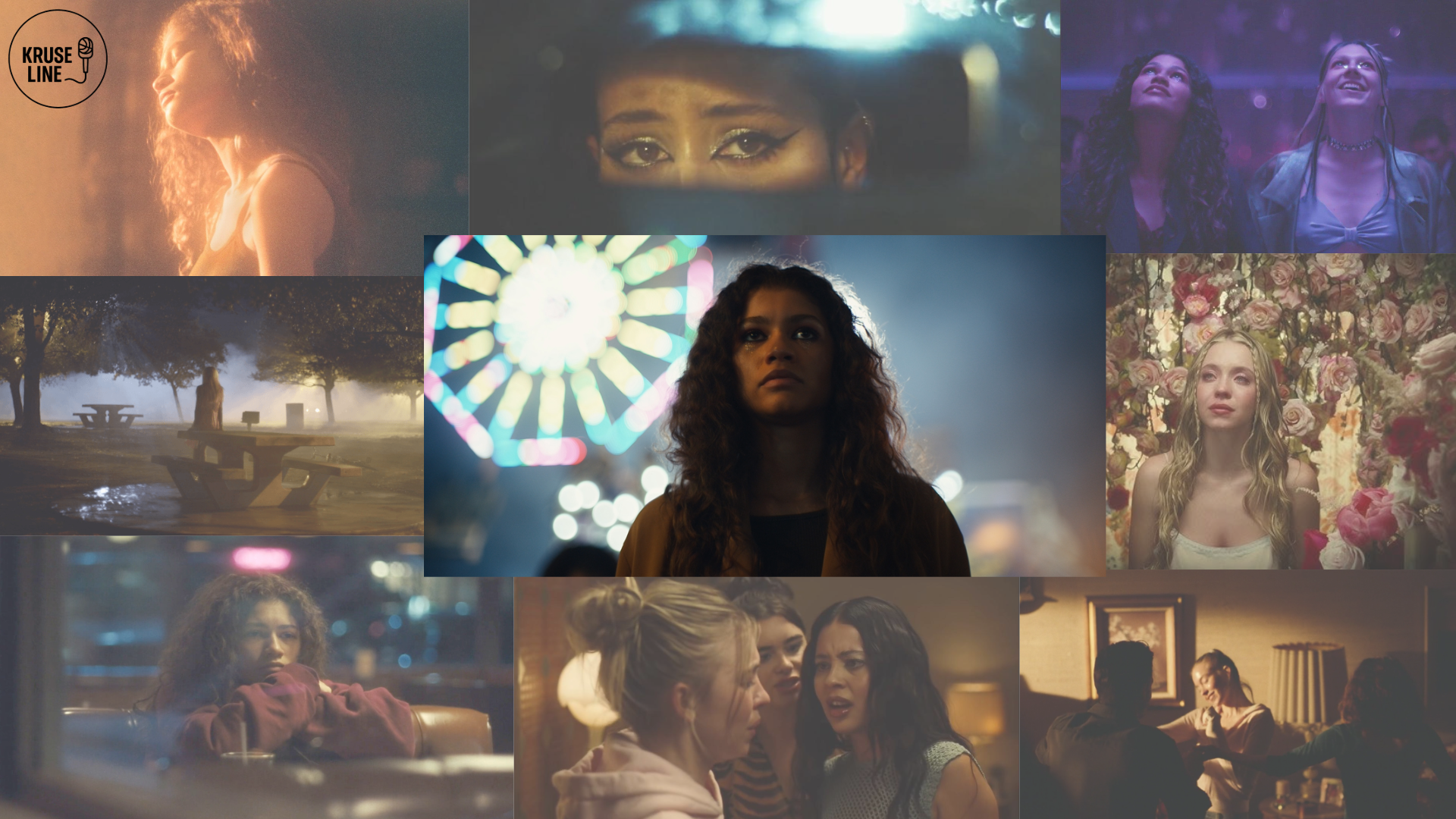
The first two seasons were defined by the dark-colored, glitter filled cinematography that immediately grabbed the viewers’ attention. This style along with the soundtrack provided by Labrinth made the series unlike anything on tv. The problem became when they tried changing it.
Before season three began, creator Sam Levinson spoke on diverting away from the style that defined the first two seasons and moved instead to a Tarantino-like crime idea. The idea behind it was understandable, as the kids grow up, the same things that were enjoyed early on can change. In execution it feels unnecessary and makes the show feel more like you’re disconnected from the actual series.
Impact
While there were plenty of better shows that aired this decade, nothing was more captivating than it. For all its flaws-and the many of them- it was something you can’t look away from. Looking back on Euphoria, it will be seen as one of the defining shows of the decade. Its use of social media that was unlike any series before, its portrayal of drug use and was led by actors who can define the next 15 years of film.
The biggest impact it leaves however is its technical use. There have been many shows before and after that have been great in their use of cinematography, music, etc. The way it was used in Euphoria made the entire world. The show, while having its multitude of issues, isn’t a show that will be left as a stain on the decade-but as a reflection of it.