
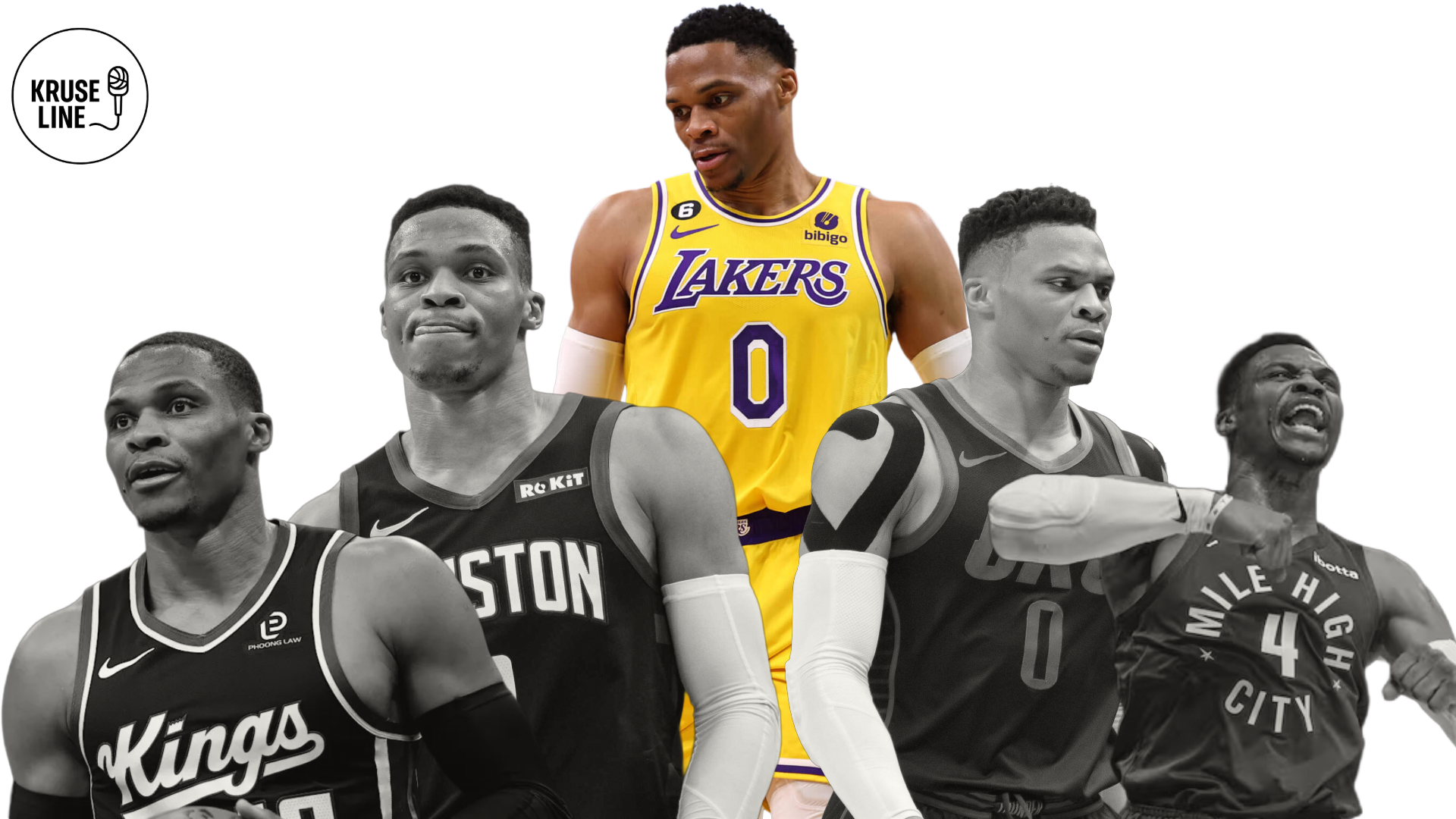
AP Photo/David Zalubowski, Russ Isabella/USA TODAY, Kelley L Cox/Imagn Images, Mark Mulligan/Houston Chronicle, The Athletic
In Russell Westbrook’s stint with the Denver Nuggets, two plays perfectly defined him. In an overtime game against Minnesota, Westbrook smoked a layup that was followed by a foul that gave Minnesota the lead. Only a few weeks later, in game one against the LA Clippers, Westbrook made a crucial three-pointer and defensive plays that led to a Nuggets comeback.
Those two plays seem like common plays, but in totality perfectly represent Westbrook’s impact on basketball. The best comparison is to a spouse. To get the greatness within Russell Westbrook, you must take in all the flaws that come with it. At his best, Westbrook was an MVP, and at his worst, he’s a battery exploding in the middle of the court.
It’s Complicated
Bill Simmons put it best; Russell Westbrook is a 90/10 player. 90% of him is the MVP-level player at his prime, but that 10% is the boneheaded plays that defined the latter half of Westbrook’s career. That’s what makes his career, and more specifically his legacy, so complicated. At his core, Westbrook is one of the best players of this decade, but he also has by far the most polarizing reputation among the other players at the top next to him.
Even with his complicated legacy as a basketball player, the person Russell Westbrook is even more important to his legacy. Coming from UCLA, Westbrook was brought to a Supersonics team only months away from moving to an even smaller market in Oklahoma City.
Despite the insane circumstances, Westbrook became the representation of not only Thunder basketball, but Oklahoma basketball. The biggest example of that was when Kevin Durant left for Golden State.
At a moment when Oklahoma City fans not only lost one of the greatest players this century, but to the team they just lost to, Westbrook became a beacon of hope. His insistence on staying with Oklahoma City gave them a backbone to rely on.
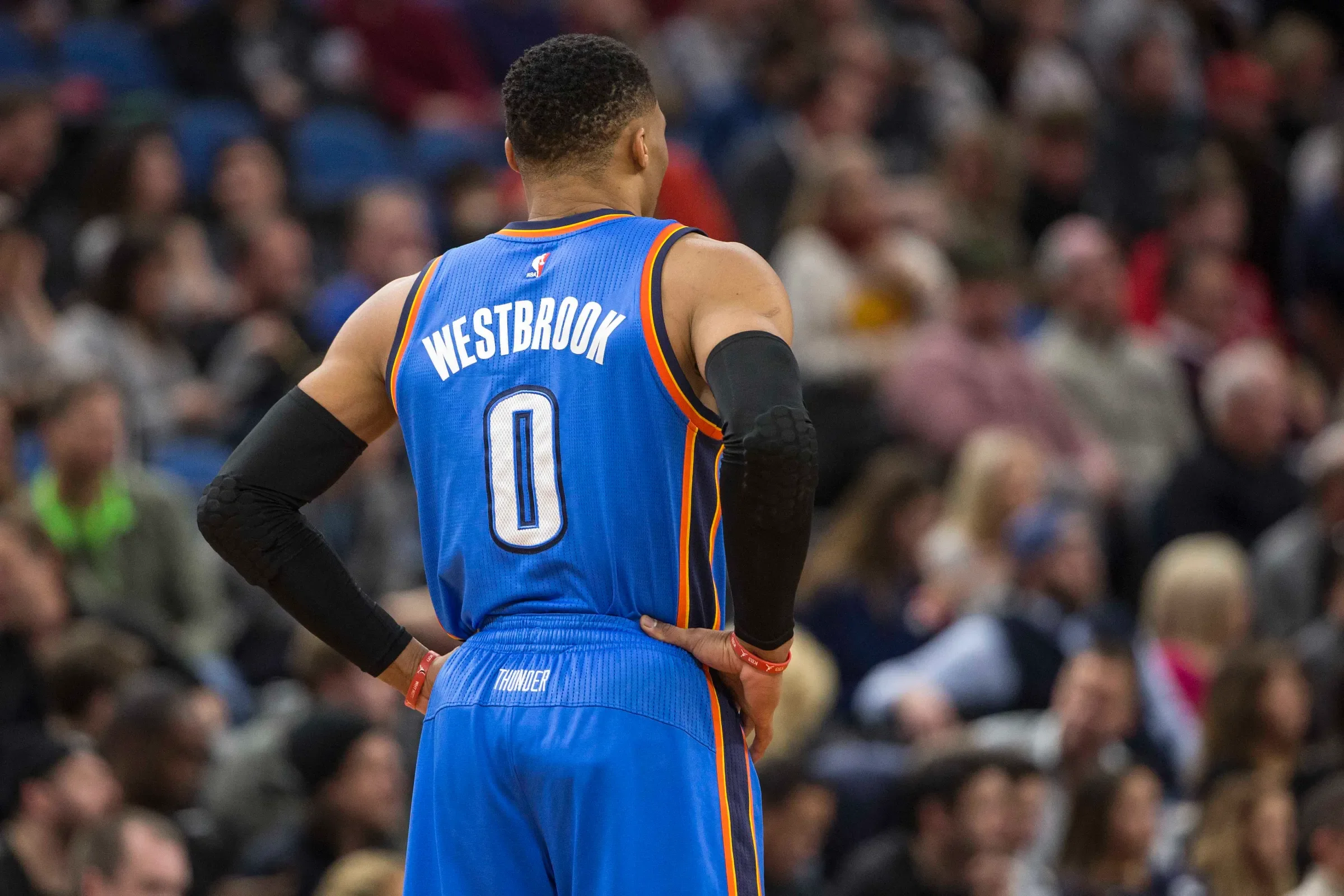
Jesse Johnson-USA TODAY Sports
The 10 Percent
Even though every player had their 10 percent, Westbrook, more than any other player, exemplified his weaknesses as much as his strengths.
At his highest levels, Westbrook still couldn’t escape the shooting struggles that defined even the earliest parts of his career. Over time, as Westbrook became an MVP and a true superstar player, it became more of something Westbrook had to prove constantly. That hope to prove everyone wrong ended up revealing just how bad it was.
For Westbrook, even in the 2012 finals where he had 43 points, it showed that no matter how good he was, his shot selection would always be his crutch. Decision-making, turnovers, and just poor shot selection at times made him a player who, even at his best, couldn’t be the guy on a title team, but don’t tell Westbrook that.
Even though all those issues were always prevalent within Westbrook’s game, the inability to lessen his role was the real killer.
The best way to describe Westbrook’s years following Oklahoma City is an old Roomba. It still is meant to do the same things you bought it for, but just does everything worse than it used to.
Every team Westbrook went to felt like a slow indication of what was already shown in OKC: Westbrook’s heavy on-ball reliance is what made him great, but also a reason OKC never made it farther than the second round post-Kevin Durant. The issue, even after multiple different stints, was that unless Westbrook became a great shooter all of a sudden, there was no way for him to become a role player.
By the end of his career, Westbrook, while in Denver and on the Clippers, sort of became that role player that he needed to become; it felt less like him accepting his role and more like an acceptance of his decline.
Westbrook was doing the same things that he did when he was in that 2012 Finals, but now, the greatness that compensated for those missteps is overtaken by the missteps.
The 90 Percent
Westbrook never truly adapted to a career post-prime, but that doesn’t take away what he did in his prime. His athleticism rivaled only MVP Derrick Rose as one of, if not the best, athletes we’ve seen in the sport. Along with that, Westbrook, Curry, and Harden helped usher in the era of scoring point guards who not only were capable of running offense, but were the main fulcrums of it.
At his best, Westbrook was the perfect representation of a ‘bat out of hell’. People can complain about his clear flaws as a basketball player, but no one would say he didn’t try his ass off.
In a clip from former NBA player Jeff Teague’s podcast Club 520, Damian Lillard was discussing Westbrook with Jeff Teague and Westbrook’s trash-talking. The moment Teague talked about was when Westbrook was talking to him, and Teague replied nonchalantly, and Westbrook chirped back, ‘That’s the problem.’
That moment with Teague feels like a perfect example of just who Westbrook truly was.
He had his 10 percent-the turnovers, the lack of scaling down, the shooting troubles-but Westbrook lived and died on the hardwood.
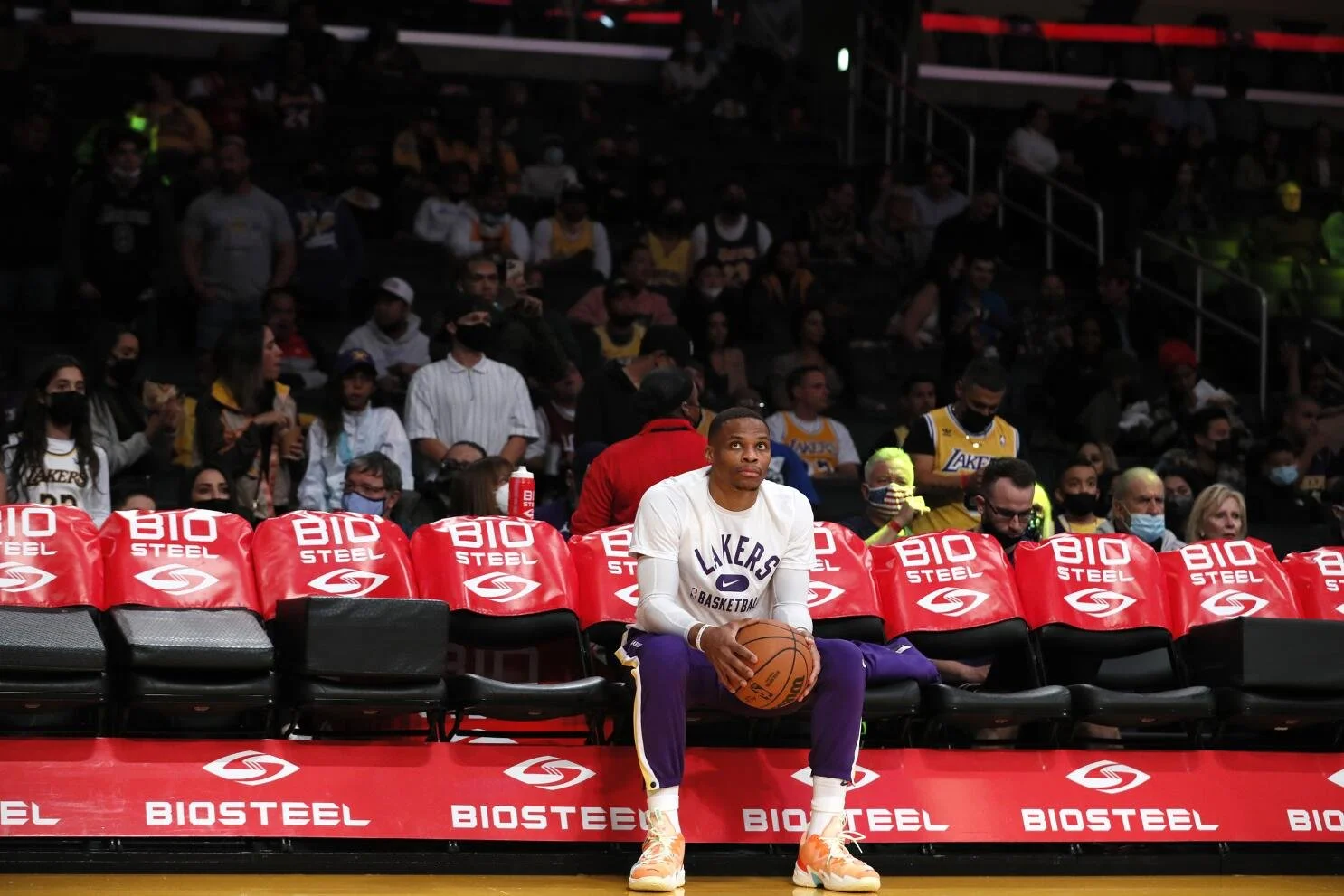
Robert Gauthier-Los Angeles Times