
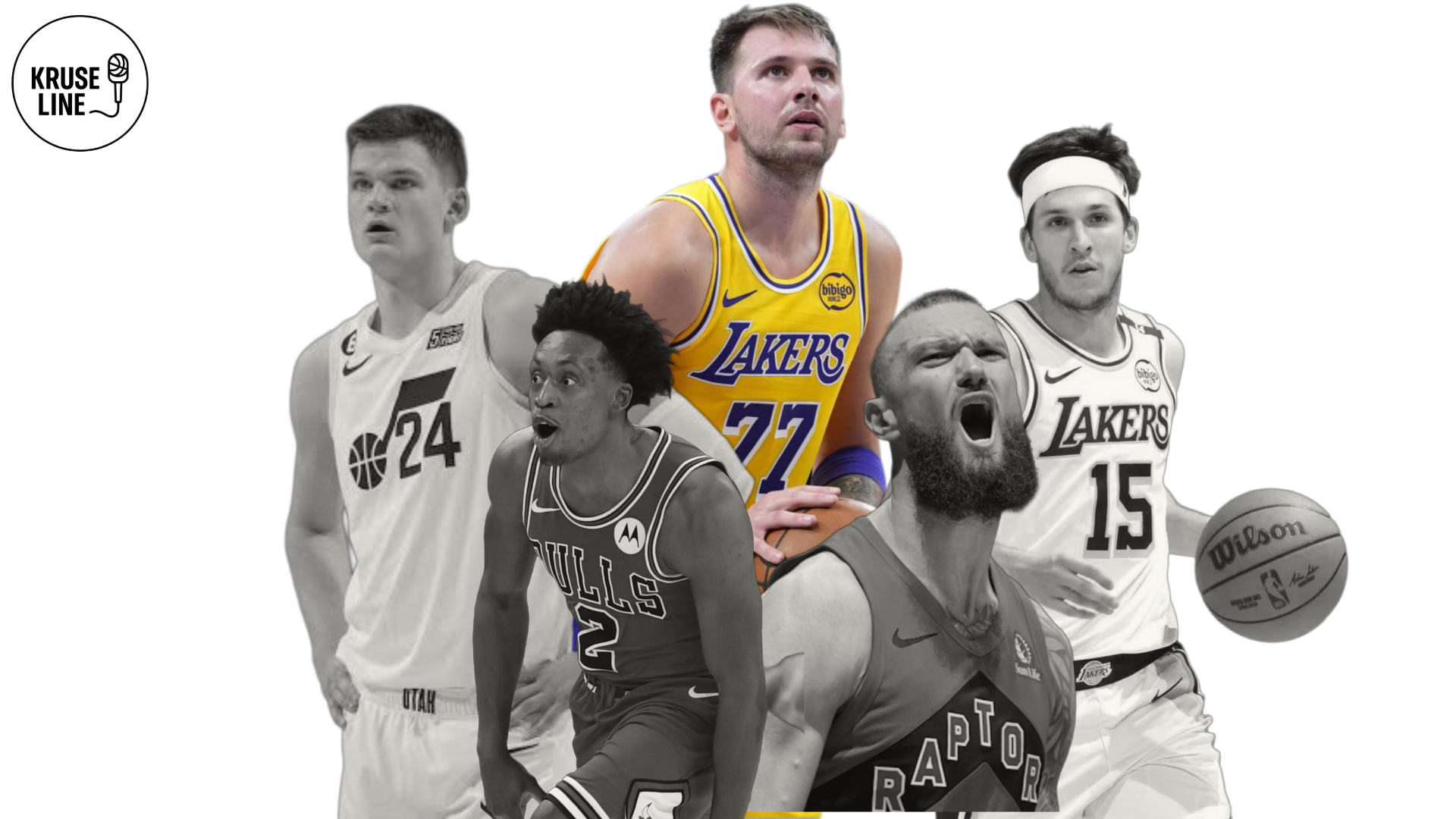
Anna Carrington-Imagn Images, Mark Blinch/NBAE-Getty Images, Kirby Lee-Imagn Images, David Sherman-NBAE, NBAE Images
“Did you do it? "Yes." What did it cost? "Everything."
Going into extension talks last offseason, the Lakers’ front office had one mission: make Luka Doncic a long-term Los Angeles Laker. Like every negotiation with a superstar, it came with a stipulation. In the summer of 2026, LA will leave the LeBron James era and move headfirst into the Luka era with not only a team perfectly suited to his strengths, but also one made in his own image.
The Lakers kept their part of the deal. In making good on that promise, they’re taking the biggest gamble since the Russell Westbrook trade.
The Reaves Of It All
The first step of the Lakers’ retool was bringing back one of the few remaining links between the LeBron era and the Luka era. While not the same level of player as Kyrie was next to Luka, Austin Reaves fills a similar role, giving the Lakers a reliable secondary scorer and playmaker when Luka is out of the game.
While the offense has never been a concern with the pairing of Luka and Austin Reaves, the defense has been plenty criticized. While LA will need to have plenty of capable defensive players around their backcourt, Dallas. The team LA is taking most of their roster construction inspiration from has shown it can succeed defensively with two below-average defensive players like Luka and Reaves by pairing them with athletic wings and bigs who can cover up for them defensively.
For Reaves himself, the contract, while maybe looking like an overpay, was needed for this team to properly succeed. After Jalen Brunson left Dallas, it became abundantly clear that while Luka’s heroics can take any team to being respectable, to win at the highest level, you need someone else that the defense needs to worry about. Austin Reaves is the answer to that. Bringing back Reaves was the soil, now the people they decided to put around them determine whether their gamble will bloom into a success.
The Supporting Characters
In pursuit of a new identity around Luka, the Lakers completely overhauled the role players who had defined the last few seasons of their basketball. Players like Rui Hachimura and Jaxson Hayes, while valuable at times for L.A., no longer fit the new Luka-centric roster.
During their run to the NBA Finals, one thing became clear about building a winning roster around Luka Dončić: it starts at the five.
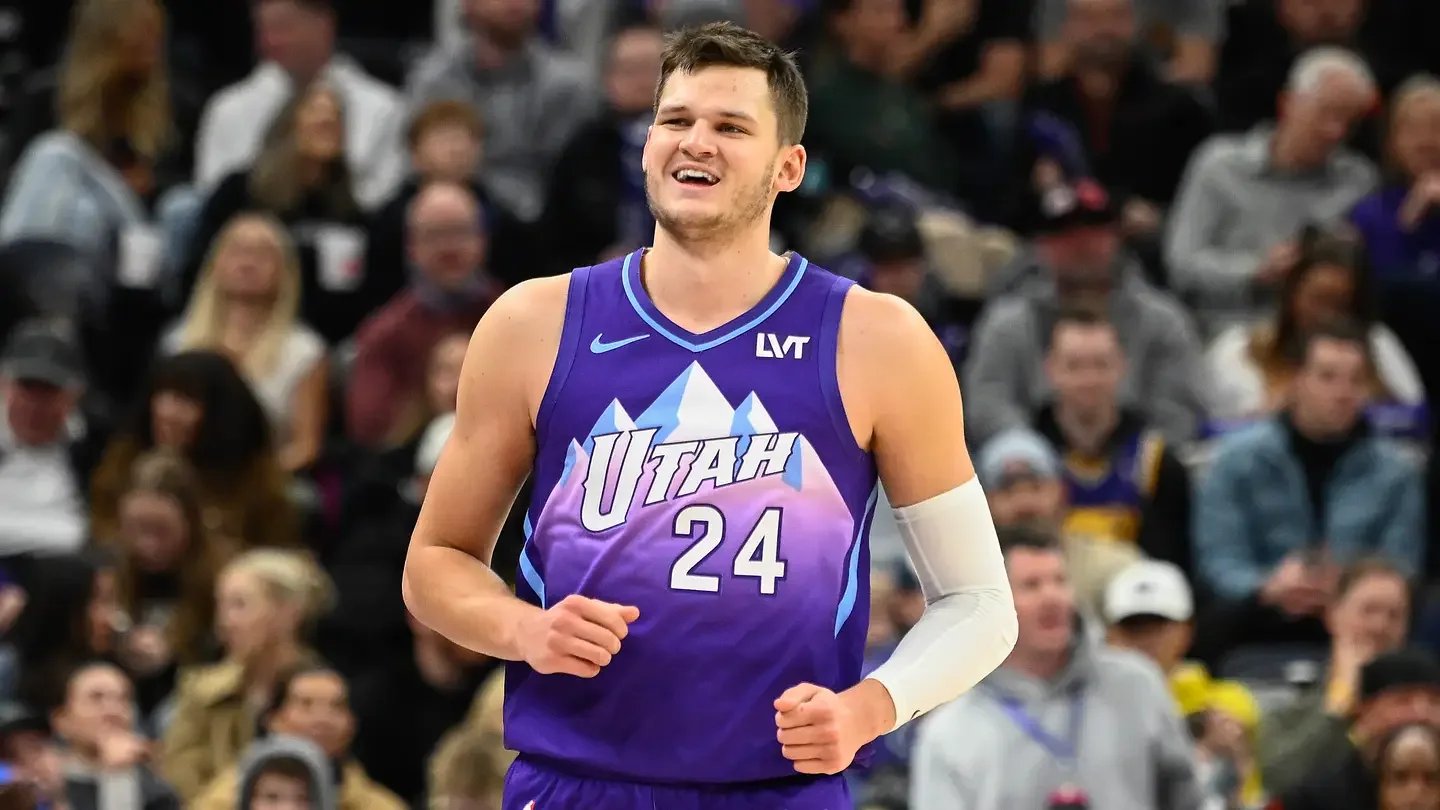
Alex Goodlett/Getty Images
Walker Kessler
In the sign-and-trade to acquire Kessler, LA traded the two remaining first-round picks they were able to trade outright over the next seven years. Along with that, two more first-round swaps and a $32 million contract to go align with it. While Kessler is a clear upgrade over any center LA has rolled out over the past few years, it will come at a high cost to future roster construction.
Following their 2020 championship, LA has repeatedly failed to help the need at the center position. After the failed signings of Marc Gasol and Montrezl Harrell, who failed to return to their previous Sixth Man of the Year heights. Since then, LA feels perpetually in need of frontcourt depth and has seemed time and time again to misfire with its attempts to fix it.
Now, for the first time since the Anthony Davis trade, Rob Pelinka and the Lakers front office made a concerted effort to add the long-term center option next to Luka, and in comes Walker Kessler. In his four years with Utah, Kessler stood out as one of the better young rim-protectors in the NBA. Over time, however, injuries and a lack of consistent proof that he is a truly defensive ceiling raiser caused Utah to worry about his long-term future in Salt Lake.
Kessler, so far, defensively has shown to be someone who, while not on the level of rim protectors like Victor Wembanyama and Rudy Gobert, is able to be a legitimate threat at contesting shots. According to stats by Basketball University, Kessler was third-ranked in DFG%.
(1) Defensive field goal percentage (DFG%) calculates the shooting accuracy of opponents when you are the nearest defender. A lower DFG% indicates better defensive efficiency, as the player is successfully forcing more misses.
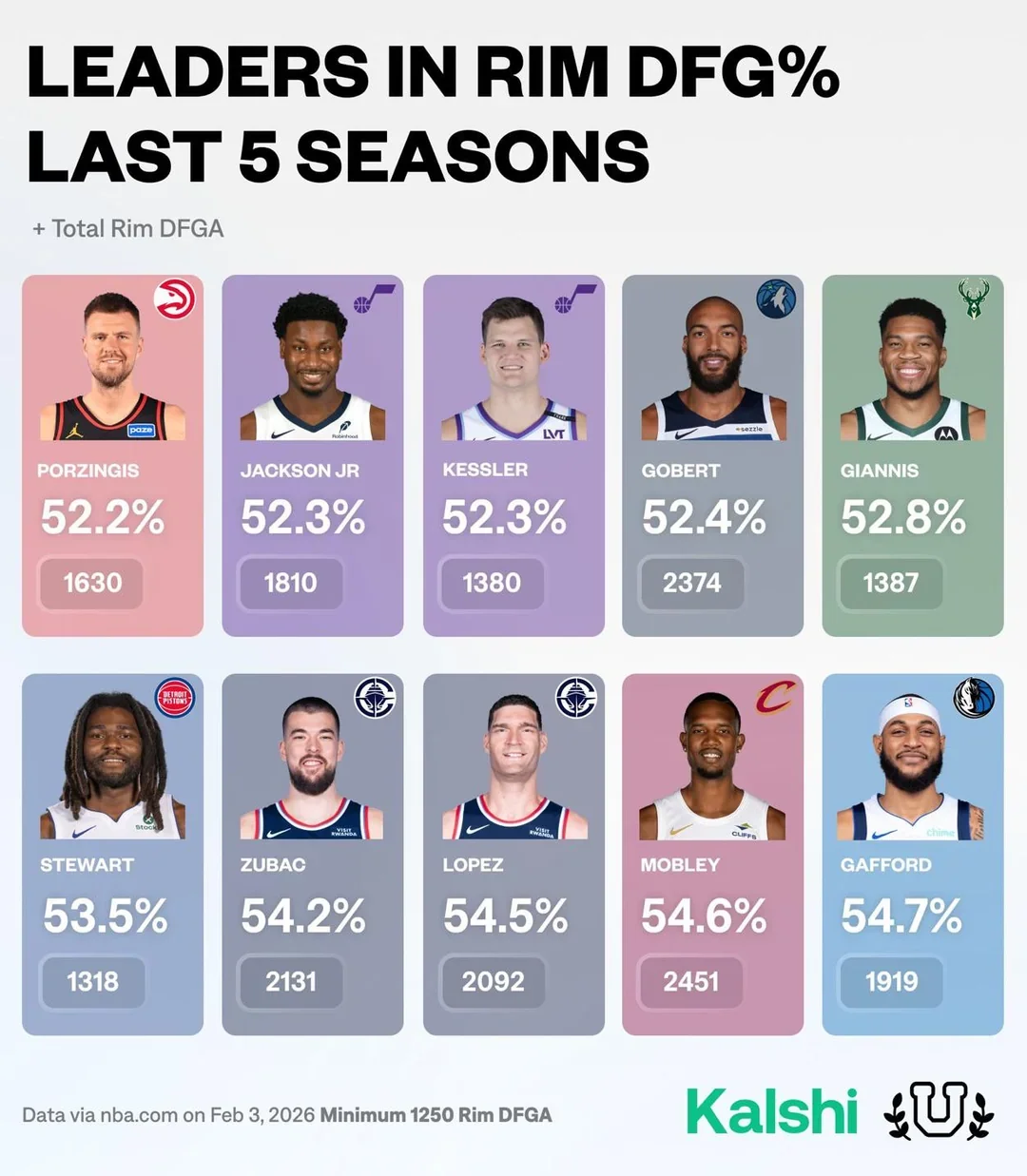
Image via Basketball University
In his time with Utah, while clearly having the stats to back up his individual defensive efforts, it rarely resulted in a great defense overall. While a valid criticism, saying that is taking away the fact that throughout all of his time in Salt Lake, the team was actively tanking year in and year out. While his injuries are another concern that needs harping on, it could also be said for what offense he is bringing with him to LA?
Not being an offensively skilled big man, Kessler primarily scores by being a lob threat with some conditions. Compared to centers like Daniel Gafford and Dereck Lively II, Kessler is far slower than them pace-wise, combined with way less physical overall as a screener. While showing floor-spacing upside down at times, it was more a novelty of a tank job than a true translatable ability. While Kessler gives Luka and Reaves their best big man in a Lakers uniform, it’s coming with a lot of hope in a guy who has the tools to be an elite-level center, and hasn't given elite-level center play up to this point.
This being the biggest signing is the definition of what LA really did this offseason. In the pursuit of making the ultimate Luka team, they prioritized center over absolutely everything outside of Austin Reaves. A team with Luka needs a good center, but that comes with the need for an even better wing defender, and that’s nowhere to be found on this Lakers roster at the moment.
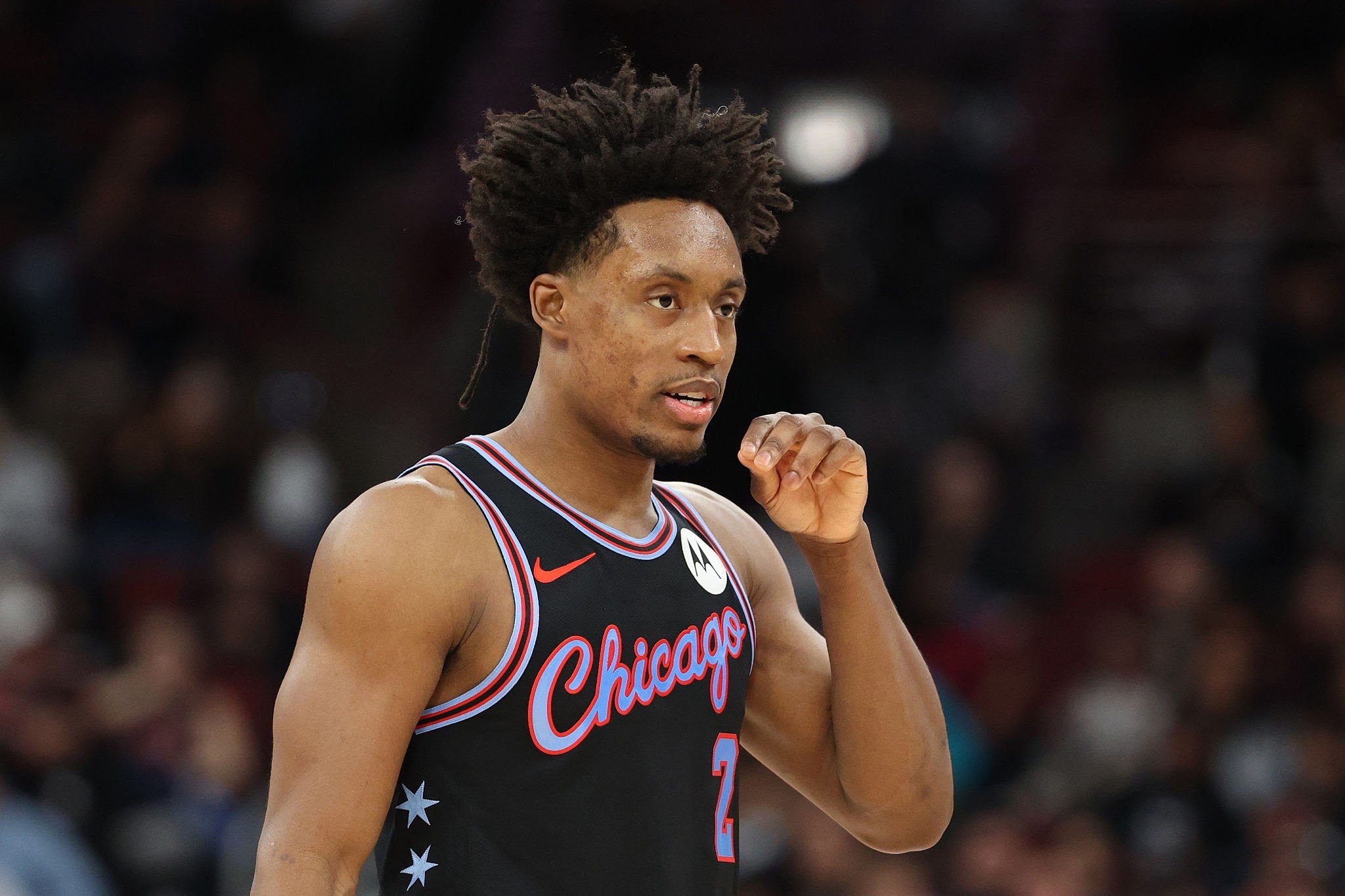
Jayden Mack/Getty Images
Collin Sexton
One of the smaller signings of LA’s shopping spree was bringing in Collin Sexton. Throughout his career, Sexton has shown himself to be like a hamster inside of a hamster ball, constantly being a twitchy and fast scorer with enough energy to not be a cone defensively. Out of all the signings for LA, Sexton has the more defined role in what he will be in the offense.
Compared to players like Mamu and Quentin Grimes, Sexton isn’t a signing that’s banking on him stepping into a role he hasn’t reached yet. With Luka and Austin Reaves being the main playmakers and creators on the team, Sexton adds another scorer who can fit next to both of them in bench lineups. Sexton doesn’t have the playmaking ability that Reaves and Luka have, but is capable of running an offense.
Even with the understanding of his role being very clear, it feels like LA should have gone after a different type of guard to help their backcourt. Sexton, while he is not a cone, is far from a great defender, and that is what LA needs more of, instead of another scoring guard. Players like Keon Ellis and De’Anthony Melton would’ve been far better fits in what LA needs to be able to justify a backcourt that already struggles defensively. Sexton can take the scoring burden off their starters, but when you have Luka, why add more scoring when you need more defense? This team will be great offensively, but that comes with a sacrifice of a capable defense.
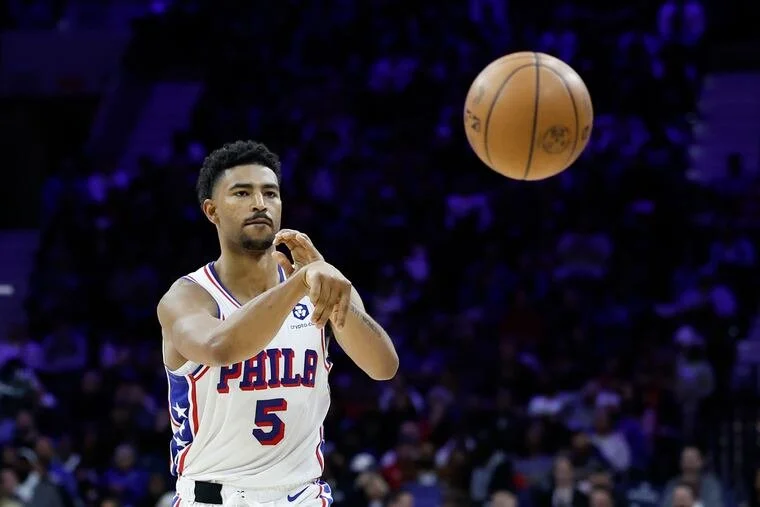
Yong Kim / Philadelphia Inquirer
Quentin Grimes
Sexton brings the scoring that LA felt they needed to solidify, and Grimes fits more of what LA needed in their backcourt. In Philadelphia, Grimes changed from a solidified 3&D role player to a more offensively-minded bench player. In LA, Grimes needs to evolve from this backup shot creator to a true off-ball defensive guard next to either Luka or Reaves.
Given his contract, along with the departure of Hachimura, Grimes seems to slot in as the wing next to Luka and Austin Reaves (due to no other true wings being on the roster besides rookie Cameron Carr). To succeed in LA, Grimes needs to go to what made him a true NBA player in New York: his ability to play defense. While still having the talent to guard another team’s best perimeter player, Grimes seemed to leave that to become another scoring two-guard.
Next to Luka and Austin Reaves, he will be a nice fit offensively, getting open shots due to the heavy defensive attention to LA’s two stars, but for LA, his real success is if that guy from New York is still there.
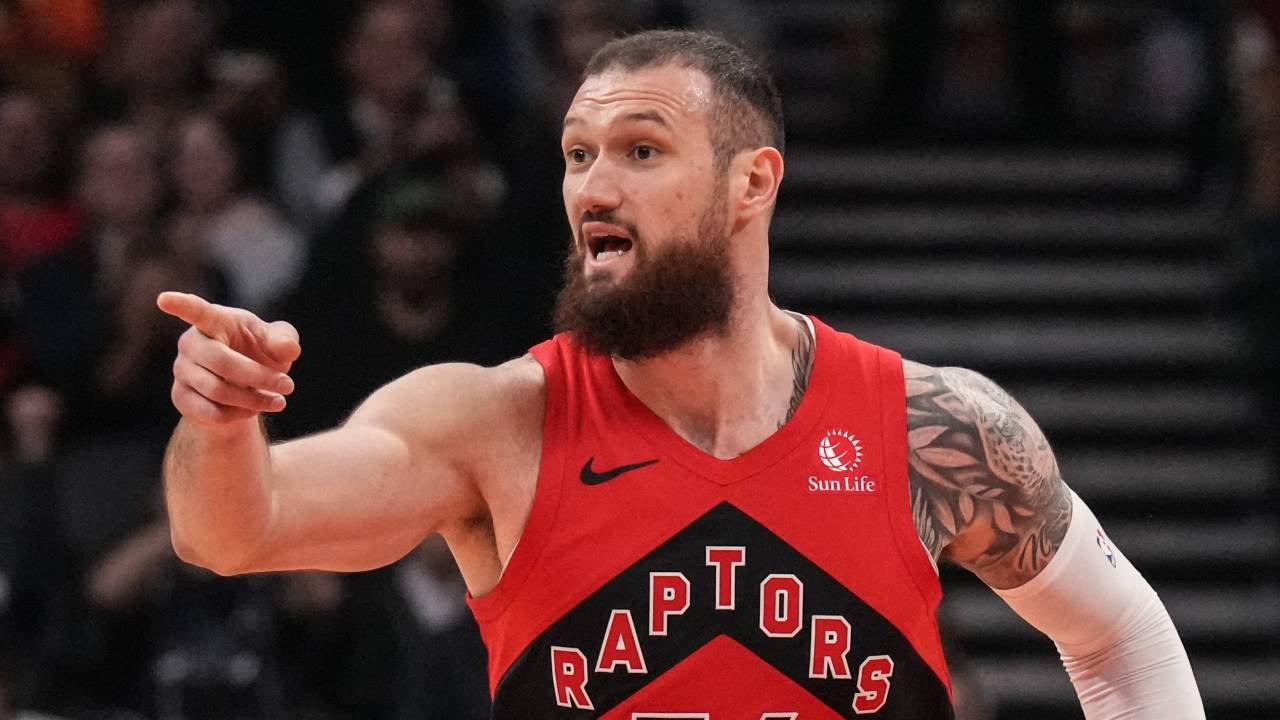
Chris Young/CP
Sandro Mamukelashvili
In the first signing post-Kessler deal, LA brought in Mamukelashvili as a sort of companion to Kessler. Not the same defensive player Kessler is, Mamu brings more to the offensive side of the ball with his ability as a floor spacer. In Toronto, Mamu cemented himself as not only one of the best bench players in the league but one of the more versatile big men offensively. The problem that comes with his fit with the Lakers is not only his salary, but his ability to actually be a starting-caliber player.
Before free agency, Mamu was expected to earn around the Taxpayers’ MLE (Mid-Level Exception) of $5-7 million; Mamu earned double that. Adding players like Mamu showed that they were no longer in Hachimura’s services, but Hachimura is a player who has proven to give LA a better chance at winning with Luka. Hachimura and Mamu are both connectors offensively, but Hachimura, while not being an all-world defender, was the backbone with Marcus Smart of a defense that had very little margin for error. Even with the little margin for error, Rui still found a way to be a true reliable starter, something Mamu hasn’t shown up to this point.
Now in LA, being the theoretical replacement for Rui Hachimura, playing the same role as a connector and shooter, but this is the idea. Even with Mamu in an offense with far better playmaking than he received in Toronto, a team with him as your starting power forward has a clear ceiling. But with the salary they gave him, it’s not a hope he becomes a starter, but a given.
In his career, he has only made one playoff appearance, that being his season with Toronto, where the spacing and connective passing that made him an invaluable piece to Toronto, lessened. For minutes on end during their first-round series against Cleveland, one of the most impactful bench players, having a +3.83 On/Off the floor swing would feel nonexistent in the series. A problem that can stem from this series and performance is, in a playoff series as a starter against teams like OKC and San Antonio, how is he gonna look with even better defenses than Cleveland rolled out?
Signing Mamu to replace that role is fine, but it makes LA look like they think Mamu is an upgrade or of similar impact to Rui’s level of impact, and that’s just a miscalculation. Rui was the most reliable wing option next to Luka behind LeBron, and now he’s gone. Mamu could raise the ceiling of this team offensively, but that’s just a prediction until it’s actually seen. The Mamu signing is emblematic of the Lakers going all in on prediction instead of what the players are currently.
Did They Reach Dallas?
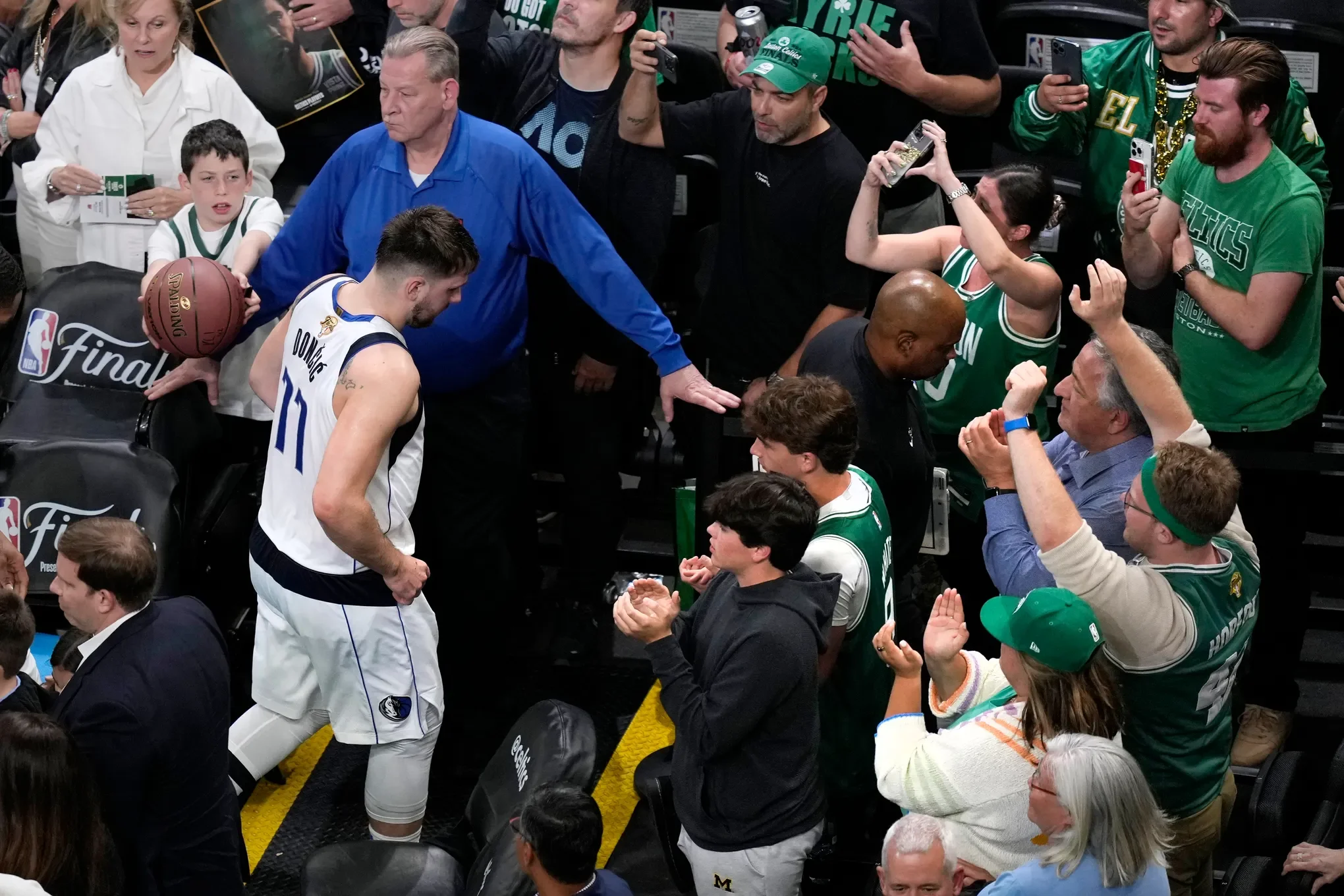
AP Photo/Michael Dwyer
LA’s entire offseason is built on creating the ideal Luka Doncic team; the risk that came with that is how most of their choices to fill out this ‘ideal’ team were a gamble on guys who, for the most part, haven’t shown to be that fit.
After the loss to Boston in the NBA Finals, one revelation became clear for Luka Doncic. To win at the highest level, Doncic needs defensive-minded wings, a true rim-protector, and a high-level secondary scorer. LA’s offseason was built on building what Luka and the front office think is the Luka Doncic team. With the dust settled, it’s clear they have the pieces of it, but not the completed puzzle. In their search for their center next to Luka, it came with losing nearly all the picks to get the team over the top.
The problem with LA is that in a conference with so many great guards and perimeter players, and at the current moment, I don’t trust anyone on this team at the moment to match up defensively against any of them. Grimes is meant to be the POA defender on paper, but we haven’t seen him do that since New York. Cameron Carr is a rookie who has the potential to become the lead defensive player. Cameron Carr and every other player feel like they have the same problem in building the perfect Luka roster. This team has players that could potentially become the perfect team next to Luka, but at the end of the day, that’s just potential.
In LA’s pursuit of emulating the Dallas team that showed the blueprint to the Luka team, they didn’t find concrete guys who would be a great pairing in the Luka Doncic system. They found potential. The risk is that it could become the perfect Luka Doncic team, but it could also become the perfect reason why LA failed Luka Doncic.