

Kevin Mazur/ WireImage, Tim Mosenfelder/Getty Images, Larry Marano/Shutterstock, Nikolai Puc, Stew Miline/AP
Before The Fun.
As George Bush left the Oval Office in early 2009, the financial recession he had left in place was still very much in effect, but one couldn’t tell from the music. During the recession of the late 2000s, music made to distract listeners from the times of financial stress was happy. While living in a time when most young people entered a world that had been torn down before they even joined, they had only one hope to hold on to.
While alcohol and tobacco took their usual role as the main way to drown sorrows during a recession, recession-pop became another way to, unlike the usual alcohol, think about a brighter future. Artists like Black Eyed Peas, Ke$ha, and Lady Gaga made music that, amid an economic downturn, offered optimism for a hopefully better future in Obama’s America.
Indie Pop’s Beginning to Pop
Following the 9/11 attacks, with the world’s eye on New York City, it gave way to far more than just sympathy, but a gateway to an emerging music scene. Bands like The Strokes, Yeah Yeah Yeahs, and Interpol helped headline music that has, for the past decade, bubbled up from the underground in American cities.
During the late 2000s, after New York’s early emergence of indie music, the last half of the decade brought it into the true mainstream. Films like Juno and Garden State were independent films, which, while becoming popular on their own, their respective soundtracks became almost as big as the films themselves.
While most of the late 2000s were defined by the electronic-centric recession pop, that music slowly turned from a way to escape the current moment to music that brought hope and optimism for the future. As people became used to being told to go out and party, and probably most importantly, tired of putting their hands in the air, indie pop followed from electronic music to bring a new kind of optimism.
Ho Hey
As indie pop began to rise, like every alternative genre before then it moved into the public consciousness in popular music. What feels like the first song to start this short-lived but memorable era of optimistic indie pop was with a Super Bowl commercial.
During the Super Bowl, Chevy released a commercial with the song, We Are Young by an emerging band called Fun. Their song, featuring Janelle Monae, while not being the first popular indie song of this era, feels like the big punch indie music needed to get into the mainstream.
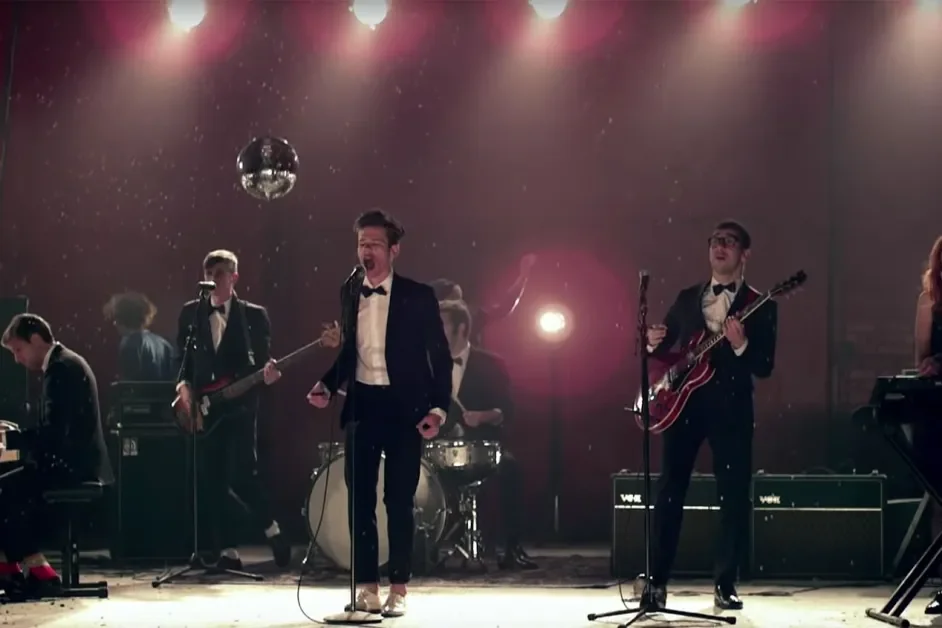
COURTESY PHOTO
While indie music is the big umbrella that spreads over different little subgenres within it, this feels like when it became the actual music that was playing on your city's biggest radio station.
While most of the artists that ended up defying this era of music spent years in the crevices of the music industry, this felt like a coming-out party for all of them. Artists like Mumford and Sons, Arctic Monkeys, and Vampire Weekend were some of the many artists that came from underground to household names within music.
At its peak, this more light-hearted era of indie music that is now satirized as the ‘Clap Stomp’ era was seen as a companion to the recession pop that defined the late 2000’s. Instead of telling you to live the best night of your life to forget that you’re still deep into a depressing era of economics, it gave people, as American politics did at the time, hope.
The Clap’s Gotta Stop
Like the era that it followed, this optimistic indie music that took over only had a short period of time at the top of popular music. While through no fault of its own, like most music trends, another one takes over for the previous one. This new trend, however, was still somewhat in the indie scene, but the exact opposite.
“I'm kinda over getting told to throw my hands up in the air"-Lorde

Photo: James K. Lowe
In late 2012 and 2013, the optimistic, hopeful music that defined the past few years, similar to the result of having the greatest night of your life, results in a sobering moment the day after said night. While the hope that mainstream indie music and America as a whole held the past few years slowly waned into a mutual look in the mirror in realization that the hope just never arrived.
Artists like Lana Del Ray, Lorde, and years later, Billie Eilish changed the idea of what people would rather listen to in this modern era of music. They changed from acoustics and hopeful to a more introspective and subdued sound. The success of music like this showed what listeners actually wanted to hear. People don’t want to be told to enjoy the day, but sit in the face of what is actually there.
Rose Tinted Satire
Over the past few years, the era of indie music, between the recession-pop and now the more introspective music, is seen more as a bad hairstyle than an actual important piece in what modern pop music is today.
Though music now is far less surrounded by the idea of constant hope, optimism, and acoustics, this era, while having its embarrassments, doesn't take away from its importance. Like any era of music, its popularity will always inspire the next group of artists to see what is happening at the current moment and change it to what they think is actually wanted to hear.
Every era of music sprang from what was happening at the moment to cause people to create. Nu Metal was in response to the most popular genres at the time, rap and rock. While that era is also looked at more satirically than others, its popularity later moved to the emergence of indie rock itself and hip hop. We went from a recession to hope, then as a society became more cynical.
While this era of music is often criticized and satirized, it finally showed listeners that after a while, you can’t just hope things become better, but instead look at what’s actually in the mirror right now.